
Culture & History · 6 min read
Cham Museum Da Nang: The Complete Visitor Guide
The Cham Museum Da Nang is the world's finest collection of Champa Kingdom sculpture, housing around 300 sandstone and terracotta artifacts. This guide covers tickets, opening hours, highlights, and how to plan your visit.
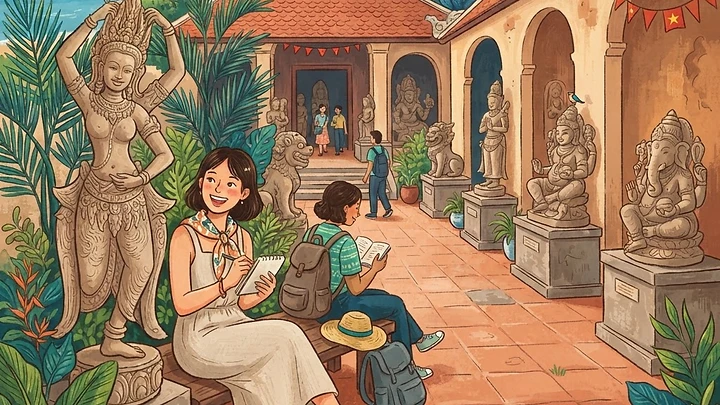
Cham Museum Da Nang: Everything You Need to Know
The Museum of Cham Sculpture in Da Nang is the world's premier repository of Champa Kingdom art, displaying around 300 sandstone and terracotta sculptures spanning the 7th to the 15th centuries. If you want to understand the history behind the ruins at My Son Sanctuary or simply experience one of Southeast Asia's most important cultural collections, this is a must-visit. Plan on 60 to 90 minutes and bring comfortable shoes.
Da Nang Museum of Cham Sculpture Guide: Key Facts at a Glance
As of November 2026, confirm all details locally before your visit.
| Detail | Information | |---|---| | Address | No. 02, 2 Thang 9 Street, Hai Chau Ward, Da Nang | | Opening Hours | Daily 07:30 to 17:00 | | General Admission | 60,000 VND (approx. USD 2.40) | | Student/Resident Concession | 10,000 to 20,000 VND (ID required) | | Payment | Cash recommended | | Audio Guide | English, French, Vietnamese via chamaudio.com on museum Wi-Fi | | Dress Code | Modest clothing required | | Photography | Generally permitted, flash discouraged |
A Brief History of the Cham Museum
The museum was established in 1915 by the École Française d'Extrême-Orient (EFEO), the French archaeological institution that systematically excavated Cham sites across central Vietnam. It is one of the oldest museums in Vietnam and the only institution in the world dedicated entirely to Cham sculpture.
The Champa Kingdom was a Hindu-influenced maritime civilization that controlled much of what is now central and southern Vietnam from roughly the 2nd century onward, reaching its peak between the 7th and 15th centuries. Champa traders and rulers built elaborate temple complexes across the region, many of which were excavated in the 19th and 20th centuries. The sculptures on display here came from those sites, including My Son, Tra Kieu, Dong Duong, and Thap Mam.
What to See Inside: Collection Highlights
The Nine National Treasures
The museum's most celebrated pieces hold official National Treasure status in Vietnam. Highlights include:
- The Tra Kieu Altar Pedestal: An elaborately carved sandstone pedestal depicting scenes from the Ramayana epic. The detail in the figures is extraordinary and considered among the finest Cham work ever found.
- The Dong Duong Gallery: Sculptures from the Buddhist monastery site of Dong Duong, which shows the influence of Mahayana Buddhism on Cham culture during the 9th century. This gallery is a useful contrast to the predominantly Hindu pieces elsewhere.
- Shiva Lingams and Deity Carvings: Dozens of representations of Shiva, Brahma, and Vishnu line the galleries, reflecting the deep spiritual life of the civilization.
- Animal and Decorative Motifs: Makara sea creatures, Garuda figures, and intricate floral borders that once decorated temple exteriors across Quang Nam province.
Galleries by Site of Origin
The museum organizes many of its pieces by the archaeological site they came from. Each room or section corresponds to a different Cham temple complex. This layout helps you understand how artistic styles evolved across different regions and periods. If you plan to visit My Son Sanctuary after the museum, pay particular attention to the My Son gallery, as the iconography you see here will give the ruins much more meaning when you see them in person.
Practical Visitor Tips
Getting There
The museum sits on the west bank of the Han River in Hai Chau, close to the Dragon Bridge. It is one of the most centrally located cultural sites in the city.
- By Grab: From the My An or beach area, expect a 15 to 20 minute ride costing around 60,000 to 90,000 VND as of November 2026.
- By motorbike or bicycle: Easy to reach from most central neighborhoods. Parking is available in front of the building.
- On foot: If you are staying near the Han River or Hai Chau district, the museum is walkable from many hotels.
Best Time to Visit
- Time of day: Morning visits (07:30 to 10:00) are cooler and less crowded. Midday heat can make the open sections uncomfortable.
- Season: February to May is the best overall period for Da Nang travel, with dry weather and moderate temperatures. Avoid October to December when typhoon season brings heavy rain.
- Crowds: The museum is generally quiet, but cruise ship arrivals can bring larger groups mid-morning. If you want a peaceful experience, arrive at opening time.
Dress Code and Rules
- Wear modest clothing. Beachwear, shorts, and sleeveless tops are not appropriate given the religious nature of the artifacts.
- Visitors who appear to have consumed alcohol will not be admitted.
- Flash photography is discouraged to protect the ancient stone surfaces, though general photography is typically allowed.
Audio Guide
The museum offers a self-service audio guide in English, French, and Vietnamese accessible via the museum's Wi-Fi at chamaudio.com. This is the best way to get depth on individual pieces if you are visiting independently. Download it when you arrive and connect to the Wi-Fi before you start your tour.
How to Build an Itinerary Around the Museum
Museum Before My Son: The Recommended Order
If you are planning a trip to My Son Sanctuary (about 70 km southwest of Da Nang), visit the Cham Museum first. The iconography you see here, the Shiva lingams, the Garuda carvings, the altar pedestals, will make the ruins at My Son far more meaningful. Without this context, many visitors find the stone towers at My Son impressive but hard to interpret.
A Half-Day Culture Loop in Hai Chau
The museum pairs well with other central Da Nang attractions:
- Start at the Museum of Cham Sculpture (07:30 to 09:30).
- Walk or take a short Grab to the Danang Fine Arts Museum for a contrast between ancient and contemporary Vietnamese art.
- Cross the Han River and explore the city center, stopping at the Da Nang Museum for broader city history.
- End the afternoon at the Dragon Bridge for the weekend evening fire show. See our Dragon Bridge fire show guide for schedule details.
Connecting to the Stone Carving Tradition
For visitors staying near the Marble Mountains, the museum has a direct connection to local craft heritage. The stone carvers of Non Nuoc village have maintained lithic artistry traditions for generations, drawing on the same techniques visible in the Cham sculptures. After the museum, consider visiting the Non Nuoc Stone Carving Memory Museum in Ngu Hanh Son to see how this tradition continues today. Our Marble Mountains visitor guide covers the broader area in detail.
Rainy Day Option
Da Nang's wet season can catch visitors off guard. The Cham Museum is a great indoor option when the weather turns. For a full list of covered cultural activities, see our guide to indoor things to do in Da Nang for adults. If you want something more interactive for families, the 3D Museum Art in Paradise in Son Tra is another solid wet-weather pick.
Other Museums Worth Combining
If you are on a culture-focused trip, Da Nang has a small but solid cluster of museums:
- Danang Fine Arts Museum: Vietnamese paintings and sculpture, also in Hai Chau. Budget an extra hour.
- Da Nang Museum: City history from prehistoric times to the present. Good for broader regional context.
- Ho Chi Minh Museum Da Nang: Political and revolutionary history, useful for understanding 20th-century Vietnam.
- Dong Dinh Museum: A smaller, private collection of Vietnamese antiques in Son Tra, worth a visit for antique enthusiasts.
Is the Cham Museum Worth Visiting?
Yes, almost without reservation. At 60,000 VND (as of November 2026, confirm locally), it is one of the best-value cultural experiences in Vietnam. The collection is genuinely world-class, the setting is calm and well-maintained, and the historical depth on offer is unmatched anywhere else in the country. Even visitors with limited interest in history tend to find the sculpture quality impressive. Allow 60 to 90 minutes for a thorough visit.
For travelers combining Da Nang with Hoi An or My Son, the museum is a near-essential stop that ties the region's history together. For residents or long-term expats, it rewards repeat visits as you learn more about the region.
Ready to explore more of Da Nang's cultural scene? Browse all attractions and activities on the Da Nang Directory map to plan your next outing.
Quick answers
- Is the Cham Museum Da Nang worth visiting?
- Yes. It holds the world's largest collection of Champa sculpture and is considered the best place in Vietnam to understand Champa history. At 60,000 VND as of November 2026, it is exceptional value. It is especially worthwhile if you plan to visit My Son Sanctuary, as the museum provides essential context for the ruins.
- How long should I spend at the Museum of Cham Sculpture?
- Most visitors spend 60 to 90 minutes. If you use the audio guide available at chamaudio.com on the museum Wi-Fi, or if you have a strong interest in archaeology and Southeast Asian history, allow up to two hours to do the collection justice.
- Is there an English audio guide at the Cham Museum?
- Yes. A self-service audio guide is available in English, French, and Vietnamese. Access it by connecting to the museum's Wi-Fi and visiting chamaudio.com. It is the recommended way to explore the collection independently, as printed labeling in English can be limited for some pieces.
- Do I need to book tickets in advance for the Cham Museum?
- No advance booking is required. Tickets are purchased at the entrance counter on arrival. Cash payment is recommended as of November 2026. General admission is 60,000 VND, with concessions of 10,000 to 20,000 VND for eligible students and residents with valid ID. Confirm prices locally before your visit.
- What is the dress code for the Museum of Cham Sculpture?
- Modest clothing is required. The artifacts are religious in nature, so beachwear, short shorts, and sleeveless tops are not appropriate. Comfortable covered clothing and walking shoes are ideal. Visitors who appear to have consumed alcohol will not be permitted to enter.
- Should I visit the Cham Museum before or after My Son Sanctuary?
- Visit the museum before My Son. The sculptures here provide essential background on Champa iconography, including the meaning of Shiva lingams, Garuda figures, and altar pedestals. Without this context, the towers at My Son can be visually impressive but difficult to interpret. The museum is about 70 km closer to Da Nang city center.
- Is the Cham Museum open on public holidays and weekends?
- Yes, the museum is open daily including weekends and public holidays, from 07:30 to 17:00 as of November 2026. During Tet (Lunar New Year), hours may vary. Check our guide to Tet in Da Nang for details on what is open during the holiday period.
More on Culture & History
All Culture & History articles
Da Nang Museum Guide: Every Venue, Price and Hour
Da Nang has five distinct museums worth visiting, from the French-era city history building at 31 Tran Phu to the Cham Sculpture collection on 2 Thang 9. This guide covers every da nang museum with current prices, opening hours and insider tips.


Da Nang Cathedral: The Pink Church Guide for Visitors
Da Nang Cathedral, known as the Pink Church or Rooster Church, is one of the city's most iconic landmarks. This guide covers history, opening hours, mass times, photo tips and everything nearby.

Dragon Bridge Da Nang: Fire Show Guide, Best Spots and Tips
The Dragon Bridge in Da Nang puts on a free fire and water show every Friday, Saturday and Sunday at 21:00. This guide covers the best places to watch, how to avoid the crowds, and how to plan your whole evening around the show.
 Translate
