
Day Trips · 10 min read
Hai Van Pass: The Complete Crossing Guide for 2026
The Hai Van Pass is a 21 km mountain road connecting Da Nang to Lang Co and Hue, free to cross by motorbike or car, with one of the most scenic stretches of road in Vietnam. This guide covers every crossing option, updated 2026 rules, costs, best stops, and the mistakes that catch first-timers out.
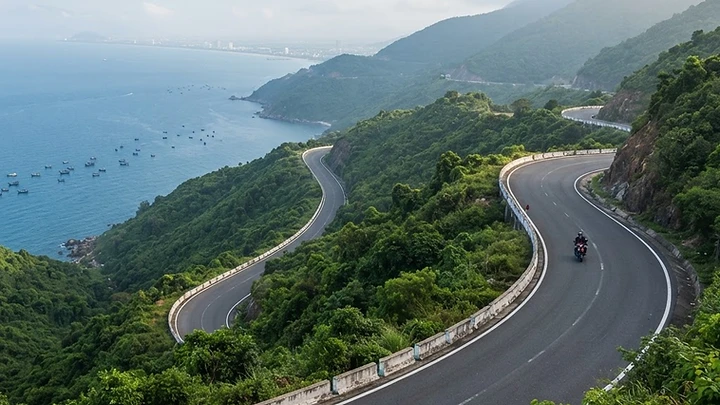
The Hai Van Pass is a 21 km mountain road climbing to around 500 meters over the Annamite Range, connecting Da Nang to Lang Co and Hue Province. The road itself is free to use by motorbike or car, the views over Da Nang Bay and the Lang Co lagoon are genuinely spectacular, and the historic Hai Van Gate at the summit charges 70,000 VND to enter (as of October 2026, confirm locally). Police are now actively fining tourists for unsafe stops, so knowing the rules before you leave Da Nang saves you money and keeps you safe.
Why Hai Van Pass Is Worth Your Time
The name translates roughly as "ocean cloud," and on most mornings the pass earns it. From the summit, looking south, Da Nang Bay curves away toward the Son Tra Peninsula. Looking north, the road drops toward Lang Co, a narrow strip of land wedged between a turquoise lagoon and the open sea. Few roads in Southeast Asia put history, coastline and mountain scenery together so efficiently.
Since the Hai Van Tunnel opened in 2005, most trucks and buses travel the 6.3 km underground route, which is closed to motorbikes entirely. The old pass road is now used mainly by tourists, local riders and some goods vehicles, so traffic is lighter than you might expect. It is still a real working road with steep gradients, sharp blind bends and weather that shifts fast, so it rewards preparation rather than impulse.
At the summit, Hai Van Gate (Hai Van Quan) is a restored Nguyen Dynasty military outpost that guarded the historic route to the imperial capital. It was designated a National Historic Site and reopened after restoration in 2024. An entrance fee of 70,000 VND per adult was introduced in 2026, with children under 13 free (as of October 2026, confirm locally). Small cafes and souvenir stalls operate at the top. Agree on prices before you order.
Getting to the Pass from Da Nang
From central Da Nang, head north on Nguyen Luong Bang Street, then continue onto Nguyen Van Cu Street, which leads directly to the start of the ascent. The pass entrance is roughly 20 to 25 km from the city center. Allow 45 minutes to an hour to reach the summit by motorbike without stops, slightly longer by car in traffic.
If you prefer not to ride, the train between Da Nang and Hue offers dramatic coastal views near the pass approach. See our Da Nang train guide for timetables, seat classes, and which side of the carriage gives the best sea views.
Before you leave, fuel up in Da Nang. There are no petrol stations on the pass itself.
Three Ways to Cross: Side-by-Side Comparison
| Option | License needed | Approx. cost (Oct 2026) | Best for | |---|---|---|---| | Self-ride motorbike | Yes, Vietnam-recognized | Rental plus fuel | Experienced riders wanting full freedom | | Easy Rider (pillion with local driver) | No | 40 to 70 USD per person, one-way to Hue | Solo travelers, couples, no valid license | | Private car with driver | No | Per vehicle, varies by size and stops | Families, heavy luggage, wet weather |
All figures are approximate as of October 2026. Confirm before booking.
Option 1: Riding the Pass Yourself
Riding your own bike gives you the freedom to stop whenever you like and stay as long as you want at any viewpoint. It is the most talked-about way to do the pass, and it is genuinely rewarding if you are properly prepared. Before you book a rental, answer these questions honestly.
- Do you hold a license Vietnam recognizes? Foreigners generally need a Vietnamese license or an International Driving Permit (IDP) issued under the 1968 Vienna Convention, together with their home country license. IDPs under the 1949 convention may not be accepted. Check before you travel.
- Is your license category correct for the engine size? Most rental bikes are over 50cc, which requires a motorcycle-category endorsement.
- Does your travel insurance cover motorbike riding? Many policies reject claims if the rider had no valid local license or was not wearing a helmet.
- Have you ridden in mountain conditions before? Steep climbs, gravel patches, heavy vehicles and sudden fog are not a good place to learn.
If all four answers are yes, the ride is excellent. Go slowly, use your horn before blind corners, and ride in daylight only.
Self-ride safety checklist:
- Wear a full or three-quarter helmet with the strap fastened the entire time you are on the bike.
- Inspect brakes, tires and lights at the rental shop and photograph any existing damage before you leave.
- Fill the tank in Da Nang before you start.
- Pull completely into a designated pull-in before stopping for photos. Never stop on a curve, in a traffic lane, or on a blind bend.
- Carry a rain jacket. Weather on the summit changes fast.
- Save the rental shop number in your phone in case of a breakdown.
Da Nang Motorbikes - Hidden Land Travel is a well-reviewed operator offering guided and self-guided tours from Da Nang, with bikes maintained to a reliable standard.
Option 2: Easy Rider (Pillion with a Local Driver)
An Easy Rider is a local guide who rides while you sit on the back. You get the open-air feeling, the spontaneous stops and the local knowledge without needing a license or familiarity with the road. For most first-timers, especially those without a Vietnam-recognized license, this is the most practical choice.
A one-way trip from the Da Nang or Hoi An area to Hue with sightseeing stops commonly costs around 40 to 70 USD per person as of October 2026. A shorter return loop to the summit and back costs less. Always agree on the total price, the route, planned stops and luggage arrangements in writing or by message before the day begins.
What is usually included:
- Driver, motorbike, helmet and rain poncho
- Stops at the main viewpoints and Hai Van Gate
- A lunch stop around Lang Co
- Sometimes extra stops such as a fishing village or waterfall
What may cost extra:
- Meals, drinks and entry fees
- Bag transfer: if you are continuing to Hue, many riders can arrange for large luggage to travel by bus for around 50,000 to 100,000 VND per bag (as of October 2026, confirm locally)
When choosing a guide, read recent reviews that mention road safety and riding behavior, not just friendliness. Ask what type of helmet is provided. A full or three-quarter helmet is meaningfully safer than a thin cap style. Agree on how they handle heavy rain before you set off.
Option 3: Private Car with Driver
A car is the right call for families, older travelers, anyone with a lot of luggage, or anyone who simply prefers comfort. You visit the same viewpoints and the same summit gate, you stay dry if it rains, and your bags ride with you the whole way.
When booking a Da Nang to Hue transfer, always say clearly that you want the scenic pass road, not the tunnel. Drivers often default to the faster tunnel route unless you specify otherwise. Ask for the full price in VND including tolls and waiting time at stops, so there are no surprises at the end.
2026 Rules and Police Enforcement: What Changed
This section matters more than it used to. As of October 2026, authorities on the Da Nang side of the pass have significantly stepped up traffic enforcement. Six tourists were recently fined 1.5 million VND each for sitting in the middle of a hairpin bend at Km905+400 to take photographs, blocking traffic.
The rule is straightforward: only stop at designated pull-ins or official parking areas. Stopping on a curve, in a lane, or on a blind bend is both illegal and genuinely dangerous. Police patrols are active and fines are enforced.
Other rules to keep in mind:
- Motorbikes are banned from the Hai Van Tunnel. You must use the pass road.
- The tunnel closes daily from 3:00 AM to 4:00 AM for maintenance (cars and trucks only).
- The pass is open 24 hours for transit.
- Hai Van Gate operates seasonal hours: summer 6:30 AM to 5:30 PM, winter 7:00 AM to 5:00 PM (as of October 2026, confirm locally).
- During typhoons or serious landslide risk, authorities may close or restrict the road. Check local news before departing in storm season.
Best Stops Along the Way
Allow 3 to 5 hours for a Da Nang to Hue crossing with stops, longer if you add extra sightseeing.
Da Nang Side Viewpoints
As you climb out of the city, the first bends open up views back over Da Nang Bay. On a clear morning you can see the entire curve of the coastline and the Son Tra Peninsula across the water. For more on that side of the coast, see our Son Tra and Lady Buddha guide.
Nam O Fishing Village
Before you start the climb, Nam O Fishing Village makes an excellent add-on stop. It is a working coastal community known for its traditional fish sauce and fresh seafood, and it sits right on the approach road from Da Nang.
Hai Van Gate at the Summit
Walk the old stone walls, read about the fortress history, and take in the views in both directions. The gate is the natural high point of any pass crossing. Entry is 70,000 VND per adult, children under 13 free (as of October 2026, confirm locally).
Thac May Treo (Hanging Cloud Waterfall)
Thac May Treo (Hanging Cloud Waterfall) is a lesser-visited natural stop near the pass that rewards those willing to venture off the main road for a short detour.
Suoi Luong Hai Van Park
Suoi Luong Hai Van Park offers a stream-side picnic and recreation spot popular with local families, and is a good place to cool down after the descent.
Lang Co
Coming down the north slope, Lang Co sits on a thin strip of land with Lap An Lagoon on one side and a long sandy beach on the other. It is the natural lunch stop for fresh seafood before continuing toward Hue. The lagoon is also worth a short detour for its calm, mirror-flat views.
When to Go
- March to May: The most reliable window for clear views. Dry, comfortable temperatures and good light for photography.
- June to August: Hot and mostly dry. Start before 8:00 AM to beat midday heat and haze.
- September to December: Central Vietnam's rainy season. Rain, low cloud and landslide risk are real concerns, particularly in October and November. Check forecasts and local news the morning of your trip.
- January to February: Cooler and often overcast. Cloud can sit on the summit for most of the day.
Whatever the season, morning is better than afternoon. Fog tends to build as the day warms, and it can obscure the views entirely. Sunrise is a popular time for photographers chasing the cloud-sea effect that gives the pass its name.
Full Cost Breakdown (October 2026)
| Item | Approximate cost | |---|---| | Pass road transit | Free | | Hai Van Gate entrance (adult) | 70,000 VND | | Hai Van Gate entrance (under 13) | Free | | Easy Rider to Hue, one-way per person | 40 to 70 USD | | Luggage transfer by bus, per bag | 50,000 to 100,000 VND | | Fuel for a motorbike round trip | Fill up in Da Nang, varies | | Lunch in Lang Co (budget per person) | 100,000 to 200,000 VND |
All figures are as of October 2026. Confirm locally before your trip.
Five Mistakes That Catch First-Timers Out
- Stopping on the road for a photo. Pull fully into a designated area first. Fines are actively being issued and the road is dangerous on its bends.
- Riding without a Vietnam-recognized license. You risk a police fine and, far worse, an insurance claim rejection if something goes wrong.
- Assuming motorbikes can use the tunnel. They cannot. You must take the pass road.
- Starting in the afternoon. Fog and heat build through the day. Leaving by 7:00 or 8:00 AM gives you the best light and the clearest views.
- Booking a car transfer without specifying the pass. Say explicitly that you want the scenic route over the mountain, not the tunnel.
For ideas on combining the pass with other destinations, the Day Trips from Da Nang guide pairs naturally with a Hai Van itinerary.
Plan Your Route
The Hai Van Pass is one of the most rewarding half-days or full days you can spend near Da Nang, whether you ride it yourself, go pillion with a local guide, or take a car with the windows down. Browse tours, rental operators, and every stop along the route in our map and listings explorer and put your crossing together before you leave the city.
Quick answers
- Is it safe to ride a motorbike on Hai Van Pass?
- Yes, for experienced riders who hold a Vietnam-recognized license, wear a helmet, and follow traffic rules. The road has steep gradients, sharp blind bends, and occasional heavy vehicles. Never stop in a traffic lane for photos. Police are actively enforcing safety rules as of October 2026, with fines of up to 1.5 million VND for obstructing traffic.
- Can motorbikes use the Hai Van Tunnel?
- No. Motorbikes are prohibited from the Hai Van Tunnel, which runs 6.3 km underground between Da Nang and Lang Co. Motorbike riders must use the scenic mountain pass road over the top. The tunnel is used by cars and trucks, and closes from 3:00 AM to 4:00 AM daily for maintenance.
- How long does it take to cross Hai Van Pass?
- Driving time from one side to the other is around 45 minutes to one hour. Most travelers spend 2 to 4 hours in total, including photo stops, a walk around Hai Van Gate at the summit, and a break at Lang Co on the north side before continuing toward Hue.
- Is there an entrance fee for Hai Van Pass?
- The road itself is free to use. However, the Hai Van Gate historic site at the summit charges an entrance fee of 70,000 VND per adult, with children under 13 free, as of October 2026. Confirm locally when you visit, as fees and hours can change seasonally.
- What is the best time of year to visit Hai Van Pass?
- March to May offers the most reliable clear weather and good visibility. June to August is hot but mostly dry. September to December is the rainy season in central Vietnam, with fog, heavy rain and landslide risk on some days. January and February are cooler but often overcast, with cloud sitting on the summit.
- Are there petrol stations or food stops on the pass?
- There are no petrol stations on the pass itself. Fill your tank in Da Nang before you start the climb. At the summit, small cafes and stalls sell drinks and snacks at tourist prices. Agree costs before ordering. The best proper meal stop is in Lang Co at the northern foot of the pass.
- Which side of the train should I sit on for views near Hai Van Pass?
- If traveling from Da Nang toward Hue, sit on the right-hand side of the carriage for the best coastal views as the train approaches the pass area. See our Da Nang train guide for full details on timetables, ticket classes, and the heritage train option between the two cities.
More on Day Trips
All Day Trips articles

Taking the Train from Da Nang: Hue, Hai Van and Beyond
Everything you need to ride the train from Da Nang, from the scenic coastal run to Hue and the heritage train to overnight sleepers to Hanoi and Nha Trang.


Linh Ung Pagoda: Lady Buddha, Son Tra Peninsula Guide
Linh Ung Pagoda on Son Tra Peninsula is home to Da Nang's iconic 67-meter Lady Buddha statue and is free to visit every day of the year. This guide covers exactly how to get there, what to wear, the best time to go, and what to see inside the grounds.


Cham Islands Snorkeling Day Trip from Da Nang
Everything you need for a Cham Islands snorkeling day trip from Da Nang: when to go, what tours include, typical costs, island rules and how to avoid a wasted day.