
Day Trips · 10 min read
Linh Ung Pagoda: Lady Buddha, Son Tra Peninsula Guide
Linh Ung Pagoda on Son Tra Peninsula is home to Da Nang's iconic 67-meter Lady Buddha statue and is free to visit every day of the year. This guide covers exactly how to get there, what to wear, the best time to go, and what to see inside the grounds.

What Is Linh Ung Pagoda?
Linh Ung Pagoda on Son Tra Peninsula is Da Nang's most visited cultural landmark and the home of the famous Lady Buddha statue. It sits on the forested Son Tra Peninsula about 10 km northeast of the city center, faces the South China Sea, and is free to enter every day of the year. Most visits take one to two hours, and the panoramic views of Da Nang Bay alone are worth the trip.
Da Nang has three pagodas that share the Linh Ung name. The one on Son Tra Peninsula, sometimes written as Linh Ung Bai But, is the newest and most prominent. The other two sit at the Marble Mountains and at Ba Na Hills. When travelers search for the Lady Buddha or the giant white statue, they always mean this one.
The Lady Buddha Da Nang: History and Meaning
The Lady Buddha, known in Vietnamese as Quan Am or Guanyin, is the Bodhisattva of Mercy in Buddhist tradition. The Son Tra statue stands 67 meters tall on a lotus-shaped base and faces outward toward the sea. Local legend says she watches over fishermen heading out from Da Nang Bay, guiding them home safely. On a clear day the statue is visible from beaches across the city, including My Khe and Non Nuoc.
Construction of the pagoda began in 2004 and it was inaugurated in 2010. The scale is hard to appreciate from a distance. Stand at the base and look up and the full height becomes clear. As of October 2026, the interior of the statue base is not open to the general public, though this has changed at different points in the past, so confirm locally when you arrive.
Entry, Hours and Admission
As of October 2026, all details below are approximate. Hours and access can change for major Buddhist festivals and ceremonies, so confirm locally on the day.
| Detail | Information (as of October 2026) | |---|---| | Admission | Free (donations welcome) | | Parking | Free | | Opening hours | 6:00 AM to 9:00 PM daily | | Dress code | Shoulders and knees must be covered | | Shoes | Remove before entering prayer halls | | Interior of statue | Not open to the public | | Typical visit length | 60 to 90 minutes; 2 hours for a relaxed pace |
There is no ticket booth, no timed entry and no booking required. A donation box near the main hall is available if you wish to contribute to upkeep of the grounds.
Dress Code at Linh Ung Pagoda
This is an active Buddhist temple, not a tourist attraction. The dress code is taken seriously and visitors in beachwear may be asked to cover up before entering prayer halls.
The rule is simple: cover your shoulders and knees.
Practical ways to handle it:
- Wear a light linen shirt or T-shirt with sleeves, and trousers, a midi skirt or a maxi dress.
- Pack a sarong or large scarf in your daypack. It folds flat, weighs almost nothing, and doubles as sun protection on the road in.
- Loan robes have reportedly been available near the entrance on some visits, but as of October 2026 this is not guaranteed. Do not rely on it.
- Flip-flops are acceptable on the open grounds but bring closed shoes if you plan to walk any of the trails on the wider Son Tra Peninsula.
- Remove your hat inside any prayer hall. Sunglasses should come off at indoor thresholds as a basic sign of respect.
If you are visiting during a ceremony or a major Buddhist holiday, the atmosphere is more formal and the crowds are larger. Follow the lead of worshippers around you.
What to See Inside the Pagoda Grounds
The grounds are larger than most visitors expect. Give yourself at least 90 minutes to see everything without feeling rushed.
The Main Prayer Hall
Monks hold services here daily and local worshippers come to make offerings throughout the day. Remove your shoes before stepping inside, keep your voice low, and check signage about photography. Taking photos of people mid-prayer without their awareness is not considered acceptable.
If you want to offer incense, the correct approach is to light it at the offering area near the entrance of the hall, hold it with both hands at chest height, bow gently, and place it in the sand tray provided. You do not need to be Buddhist to make a simple offering.
The Garden of 18 Arhat Statues
A long row of stone figures with dramatically different faces and expressions lines a path through the grounds. These represent the 18 Arhats of Buddhist tradition. The garden is one of the most photographed sections of the site and is easy to miss if you walk straight toward the big statue.
Bonsai and Ornamental Gardens
Well-maintained garden beds and shaped bonsai trees fill the quieter corners of the complex. These areas stay calm even when tour groups crowd the statue terrace, making them a good spot to pause.
Sea-Facing Terraces
The terraces at the front of the grounds face Da Nang Bay and the coastline. This is the best position for photos of the Lady Buddha with water in the background, and the best place to watch the afternoon light change on the white stone.
Nearby: Buu Dai Son Pagoda
A short distance from the main complex, Buu Dai Son Pagoda is a quieter temple that most visitors skip entirely. If you want a more contemplative experience away from tour groups, it is worth combining with your Linh Ung visit.
How to Get to Linh Ung Pagoda on Son Tra Peninsula
There is no practical public bus route to the pagoda as of October 2026. Your realistic options are set out below.
Option 1: Grab Car (Best for Most Visitors)
A Grab car from the Han River area or My Khe Beach takes roughly 20 to 30 minutes. Cost is approximately 100,000 to 180,000 VND one way as of October 2026. Prices shift with demand, time of day and your starting point.
Step-by-step directions via Grab:
- Open the Grab app and enter "Linh Ung Pagoda Son Tra" or the address on Hoang Sa Street.
- Choose GrabCar for comfort or GrabBike to save money.
- Before your driver leaves, agree on a flat waiting fee if you want them to stay, or note the time so you can book a return ride before you explore.
- Cars are not always queuing at the pagoda, especially after 6:00 PM. Book your return from inside the grounds before you run low on battery.
Option 2: Grab Bike
A Grab motorbike costs less than a car and the coastal Hoang Sa Street is a genuinely scenic ride. You sit behind a licensed driver. Bring sunglasses and expect a few steep curves near the top.
Option 3: Self-Drive Motorbike
Many confident riders drive themselves. The road to the pagoda is paved all the way but has steep sections, sharp bends and fast-moving traffic from tour vans. Be realistic about your skill level. Note that deeper forest routes on Son Tra do not allow automatic scooters, only manual or semi-automatic bikes. If you plan to explore beyond the pagoda, check the vehicle rules before you rent.
Option 4: Organized Tour
Half-day tours often combine Linh Ung Pagoda with the Marble Mountains or a beach stop. A guide who can explain the temple history and point out wildlife adds real value. Check how long the tour actually stops at the pagoda, because some allow only 30 minutes.
For ideas on pairing Son Tra with a full beach day, see our article on the best beach day trips near Da Nang.
Best Time to Visit Linh Ung Pagoda
By Time of Day
Time of day matters more than any other factor.
- 6:00 AM to 9:00 AM: The best window. Air is cooler, light is soft and golden for photography, crowds are small, and morning prayer services give the visit a genuine spiritual atmosphere. This is the single best time to come.
- 3:30 PM to sunset: The second-best window. Golden afternoon light on the white statue and the bay is beautiful, the midday tour bus rush has cleared, and the grounds feel calmer.
- 11:00 AM to 2:00 PM: The least enjoyable time. Intense heat, harsh flat light for photos, and the highest concentration of tour groups.
By Season
The dry season from February to August brings the most reliable clear skies and the best long-distance views across the bay. Da Nang's rainy season runs roughly September to December, with typhoon risk highest in October and November. Rain does not stop a pagoda visit, but roads can become slippery and forest routes on the rest of the peninsula may close after storms.
If your visit falls around Lunar New Year, expect large local crowds but also a more vibrant atmosphere with incense, offerings and ceremony. Our Tet in Da Nang guide covers what to expect and how to enjoy it.
Exploring the Son Tra Peninsula Beyond the Pagoda
The Son Tra Peninsula loop covers a protected nature reserve of around 4,390 hectares, rising to roughly 700 meters at Ban Co Peak. The pagoda sits near the coast. Reaching the forest interior requires different planning and specific vehicle types.
Forest Route Rules as of October 2026
After landslides closed the forest routes for several years, they reopened in 2025 with updated rules. The road to Linh Ung Pagoda is separate and generally open year-round. Always confirm route conditions locally before heading deeper into the reserve, especially after rain.
- Route 1, Yet Kieu to Ban Co Peak to Bai Bac: One-way only. No automatic scooters. No buses over 24 seats.
- Route 2, Bai Bac to the heritage banyan tree: Walking only. No vehicles at all.
- Route 3, Tien Sa to Suoi Om to Ban Co Peak: Manual and semi-automatic motorbikes and sport bicycles only. Reported closed due to storm damage as of August 2026. Confirm locally before planning around it.
Forest visiting hours: 7:30 AM to 6:30 PM from March to September, and 7:30 AM to 5:30 PM from October to February, as of October 2026.
Viewpoints and Sunrise
For sunrise, View Ngam Binh Minh Son Tra is a dedicated sunrise viewpoint on the peninsula that rewards a very early start. Son Tra Sunset Viewpoint and Son Tra Viewpoint Cafe are good golden-hour options if you want a drink in hand while the light changes.
Wildlife on Son Tra
Red-shanked douc langurs, one of the world's most visually striking primates, live in the forested interior. Your best chance of spotting them is early morning in a quiet part of the reserve, away from tourist traffic. Keep voices low, stay on the path, and never feed any wildlife including the macaques that sometimes appear near the lower parking area at the pagoda.
Two Suggested Visit Plans
Morning visit (recommended)
- Depart by 6:30 AM via Grab car.
- Arrive at Linh Ung Pagoda by 7:00 AM. Go to the main hall first while morning prayers are underway.
- Walk the Arhat garden and the bonsai section.
- Circle the Lady Buddha base and spend time on the sea-facing terraces.
- By 8:30 AM, head to a viewpoint cafe for breakfast before tour buses arrive.
- Back in central Da Nang by 10:00 AM.
Afternoon visit
- Depart around 3:30 PM.
- Arrive at the pagoda by 4:00 PM. Start with the gardens and move toward the terraces.
- Watch the late afternoon light on the statue and the bay from 5:00 PM onward.
- Book your Grab return before the grounds close at 9:00 PM.
- Have dinner nearby. Nha Bep Xua on Son Tra serves Vietnamese comfort food worth stopping for on the way back.
Combining Linh Ung With Other Da Nang Temples
If temples and spiritual sites are a focus of your trip, Da Nang has more to offer. Quan The Am Pagoda and Ba Da Pagoda are both at the Marble Mountains and pair well with a Son Tra visit on the same day. For full details on that site, our Marble Mountains visitor guide covers tickets, caves, the elevator and timing.
Practical Tips Before You Go
- Bring more water than you think you need, especially between April and September.
- Small-denomination cash is useful for drinks near the entrance and the donation box.
- A fully charged phone with data lets you book your return Grab from inside the grounds.
- If you are sensitive to incense smoke, the main hall and offering areas can be quite heavy with it on busy prayer days.
- The main grounds are mostly flat near the central buildings, but some paths have steps and uneven paving. Specific mobility access information is limited in current sources, so contact the pagoda directly if this matters for your group.
- Never feed the monkeys. It harms them, and macaques can snatch bags, phones and food quickly.
Ready to plan your visit? Browse all Son Tra attractions and build your itinerary on our Da Nang map.
Quick answers
- Is there an entrance fee for Linh Ung Pagoda?
- No, admission is free as of October 2026. Parking is also free. A donation box is available near the main hall if you wish to contribute to the upkeep of the grounds. No booking, ticket booth or timed entry is required. Confirm locally in case this changes for special events.
- How tall is the Lady Buddha statue at Linh Ung Pagoda?
- The Lady Buddha statue at Linh Ung Pagoda on Son Tra Peninsula stands 67 meters tall on a lotus-shaped base. It faces outward toward the South China Sea and is visible from beaches across Da Nang on a clear day, including My Khe Beach.
- Can you go inside the Lady Buddha statue?
- As of October 2026, the interior of the Lady Buddha statue base is not open to the general public. This has changed at different points in the past, so it is worth asking staff when you arrive in case access has been restored since this guide was last updated.
- What is the dress code at Linh Ung Pagoda?
- Visitors must cover their shoulders and knees to enter the prayer halls. A sarong or scarf carried in your bag is the easiest solution. Shoes must be removed before entering any indoor hall. Hats should come off inside. Loan robes have sometimes been available at the entrance but cannot be guaranteed.
- How many Linh Ung pagodas are there in Da Nang?
- There are three pagodas sharing the Linh Ung name in Da Nang. The one on Son Tra Peninsula, also called Linh Ung Bai But, is the newest and most visited. The other two are located at the Marble Mountains and at Ba Na Hills. The Lady Buddha statue is only at the Son Tra site.
- Are there monkeys at Linh Ung Pagoda?
- Yes. Macaques occasionally appear near the lower parking area at the pagoda, and the wider Son Tra Peninsula is home to red-shanked douc langurs, one of the world's most colorful primates. Never feed any wildlife. Macaques can grab bags, phones and food, and feeding them disrupts their natural behavior.
- What is the best time of day to visit Linh Ung Pagoda?
- Early morning between 6:00 AM and 9:00 AM is the best time. The air is cooler, the light is softer for photography, crowds are much smaller, and you can witness morning prayer services. Late afternoon from around 3:30 PM to sunset is the second-best option for golden light on the statue and bay.
More on Day Trips
All Day Trips articles

Taking the Train from Da Nang: Hue, Hai Van and Beyond
Everything you need to ride the train from Da Nang, from the scenic coastal run to Hue and the heritage train to overnight sleepers to Hanoi and Nha Trang.

Hai Van Pass: The Complete Crossing Guide for 2026
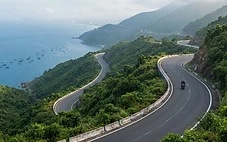
The Hai Van Pass is a 21 km mountain road connecting Da Nang to Lang Co and Hue, free to cross by motorbike or car, with one of the most scenic stretches of road in Vietnam. This guide covers every crossing option, updated 2026 rules, costs, best stops, and the mistakes that catch first-timers out.


Cham Islands Snorkeling Day Trip from Da Nang
Everything you need for a Cham Islands snorkeling day trip from Da Nang: when to go, what tours include, typical costs, island rules and how to avoid a wasted day.