
Food & Drink · 9 min read
Da Nang Cooking Classes: How to Choose the Right One
Most Da Nang cooking classes follow the same shape, but the market visit, the dish list and the group size make all the difference. Here is how to choose well.
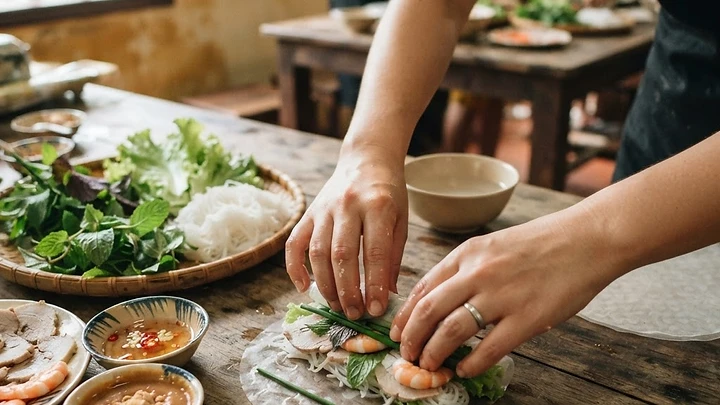
Guided cooking classes offered in Da Nang usually combine a morning visit to a local market with a hands-on lesson where you cook three to five Vietnamese dishes, then sit down and eat everything you made. As of late 2026, most classes cost roughly 24 to 46 USD per person and last between 2.5 and 6 hours, depending on whether a market tour, transfers or extras like a basket boat ride are included. The best class for you depends on the dishes taught, the group size and how much of the market you actually see.
Why does this matter? Many classes look identical online, with the same smiling photos and the same spring rolls. But a good class teaches you how to read a menu, what to point at in a market and which local dishes to hunt down for the rest of your trip. A weak one is a short demo with a set menu you could learn anywhere. This guide shows you how to tell the difference.
Key Takeaways
- As of late 2026, published prices for Da Nang cooking classes sit in a fairly narrow band, roughly 24 to 46 USD per person.
- Classes with a real market tour cost a little more but teach you far more about local food and prices.
- Look for central Vietnamese dishes such as mi Quang, banh xeo and nem lui, not just a generic national menu.
- Small groups of around six to eight people give you real hands-on time at the stove.
- Morning classes catch the market at its liveliest, and you should not book lunch afterwards, because you will be full.
- Tell the school about vegetarian, vegan or allergy needs when you book, not on the day.
What Guided Cooking Classes Offered in Da Nang Usually Include
Most Vietnamese cooking classes in Da Nang follow the same three-part shape:
- Market visit. You meet your teacher and walk through a local wet market to choose vegetables, herbs, meat or seafood.
- Cooking session. You move to a kitchen, often in a family home or a small cooking school, and prepare several dishes with guidance.
- The meal. You sit together and eat what you cooked, often with a drink and a dessert or fruit.
Many classes also give you printed or digital recipes to take home. Some add extras like a coffee stop, a herb garden visit or a boat ride.
Typical formats and prices
As of late 2026, recent local guides and booking platforms show roughly these options:
- Kitchen only, no market: about 2 to 2.5 hours, often around 24 to 31 USD per person
- Market tour plus cooking class: about 3 to 4.5 hours, often around 35 to 40 USD per person
- Full day with transfers and extras: about 5 to 6.5 hours, often around 44 to 46 USD per person
Prices change with season, group size and booking platform, so always confirm the current price and what is included before you pay.
The Four Questions to Ask Before You Book
Before you choose a class, ask these four questions. They separate a memorable experience from a forgettable one.
1. Is there a real market visit?
A good market visit lasts around 30 to 45 minutes. Your teacher explains herbs, shows you how to tell fresh fish cake from old, and lets you buy ingredients yourself. A weak version is a ten-minute walk past a few stalls for photos.
Da Nang's best-known central markets include Han Market near the river and Con Market, a large local market a short ride away. Some classes visit smaller neighborhood markets instead, which can be quieter and more local.
2. What dishes will you cook?
Ask for the exact dish list. If it is only fresh spring rolls, pho and a green papaya salad, you are learning a standard tourist menu. A class that teaches central Vietnamese food might include:
- Mi Quang, the region's signature turmeric noodle dish with pork, shrimp, peanuts and rice crackers
- Banh xeo, crispy rice pancakes wrapped in rice paper and herbs
- Nem lui, grilled minced pork on lemongrass sticks
- Banh trang cuon thit heo, rice paper rolls with boiled pork and fresh herbs
- Nuoc cham and mam nem, the dipping sauces that make central Vietnamese food taste the way it does
3. How many people are in the class?
Around six to eight people is ideal. You get your own station, time to ask questions and real hands-on cooking. Above roughly twelve people, the class can feel more like watching a demonstration.
4. Where is the class actually held?
Some classes marketed as "Da Nang cooking classes" take place in the Hoi An countryside, with transfers included. These are often combined with farm visits or boat rides. That can be a lovely day out, but it is a different product. If you are already planning a Hoi An trip, you may prefer a class there and save the long transfer.
Market Tour Cooking Classes: Why They Are Worth It
Of all the guided cooking classes offered in Da Nang, we recommend choosing one with a proper market tour. Here is why.
First, you learn what things cost. Watching a local teacher shop shows you fair prices for fruit, herbs and seafood, which helps for the rest of your trip.
Second, you learn what to point at. Vietnamese menus and market stalls can feel overwhelming. After a guided walk, you will recognize ingredients like rau ram (Vietnamese coriander), perilla leaves and banana blossom.
Third, it is a great cultural experience. Markets are where locals shop, chat and eat breakfast. You see daily life in a way that sightseeing alone rarely shows.
If you love markets, the dawn seafood scene is worth a separate visit. Our Tho Quang fish market guide explains when to go and what to expect.
Choosing by Traveler Type
Different travelers need different classes. Here is a quick guide.
- Couples: look for small classes held in a family home, where you can cook side by side and enjoy a relaxed meal.
- Families with kids: choose a class with simple dishes like rice paper rolls and pancakes, and ask about minimum ages. Rolling and folding are the parts kids enjoy most.
- Solo travelers: group classes are a great way to meet other travelers. A morning class with a market tour gives you plenty of time to chat.
- Serious home cooks: look for longer classes with more dishes, sauce making and printed recipes. Ask whether you will make dishes from scratch or use prepared ingredients.
- Vegetarians and vegans: many classes adapt dishes, but fish sauce and fermented shrimp sauce appear in a lot of recipes. Ask for a fully plant-based menu when you book.
- Travelers with food allergies: share details in writing before booking and ask how the kitchen handles peanuts, shellfish and fish sauce.
Countryside Classes and Hoi An Combos
Some of the most popular half-day and full-day classes combine cooking with time in the countryside around Hoi An, about 30 kilometers south of Da Nang. These often include:
- A visit to Tra Que Vegetable Village, a well-known organic herb and vegetable growing area near Hoi An
- A basket boat ride in the Cam Thanh coconut palm waterways
- A herb garden walk where you pick some of your own ingredients
- Return transfers from Da Nang hotels
These combos are a great choice if you want cooking plus scenery in one day. They take longer and include more travel time, so they suit relaxed itineraries better than packed ones. Check whether the transfer is included, how long the ride is and whether the boat ride is part of the price.
Morning or Afternoon Class?
Morning classes are usually the better choice if the market matters to you. Markets are busiest and freshest early in the day, and by late morning the best seafood and herbs may be gone. A morning class also means you eat your cooked meal as lunch.
Afternoon and evening classes have their place too:
- They suit travelers who want to spend the morning at the beach.
- Some skip the market or visit a quieter one.
- Evening classes can double as a fun dinner date.
One important tip: most classes serve a full meal. Do not book a big lunch or dinner right after. You will be too full to enjoy it.
Cooking classes are also one of the best things to do when the weather turns. Da Nang's rainy season runs roughly from September to December, and an indoor class makes a wet day feel like a treat. Our rainy day guide lists more indoor ideas, and our article on indoor things to do for adults covers museums, galleries and other classes.
How to Book a Cooking Class in Da Nang
Booking guided cooking classes offered in Da Nang is simple once you know what to look for. Follow these steps:
- Decide your format: kitchen only, market tour plus class, or a countryside combo.
- Shortlist two or three classes on a booking platform or Google Maps, and read reviews from the last few months.
- Check the dish list and make sure it includes the local dishes you want to learn.
- Confirm the group size, the meeting point and whether hotel pickup is included.
- Share dietary needs in writing when you book.
- Book at least a day ahead. Good small classes fill quickly, especially in the busy dry season months.
- Check the cancellation policy, especially during the rainy season, in case of storms.
What to bring
- Comfortable clothes you do not mind splashing
- Closed shoes or sandals with grip for wet market floors
- A small amount of cash for drinks or tips
- A reusable bag if you want to buy spices or sauces at the market
- Your phone or camera for photos and recipe notes
Mistakes to Avoid
These small mistakes can turn a great class into an average one:
- Choosing on price alone. The difference between the cheapest and most expensive classes is often only a few dollars, but the experience can be very different.
- Skipping the dish list. Always check what you will cook before you pay.
- Booking on your last day. A class is most useful early in your trip, because it teaches you what to order everywhere else.
- Forgetting dietary needs. Fish sauce is in a lot of dishes, so plan ahead.
- Booking a big meal afterwards. You will already have eaten a full lunch or dinner.
- Not asking about transfers. Some countryside classes are far from your hotel.
Pick a morning class with a real market tour, check the dish list for central Vietnamese food and keep the group small.
After your class, you will see Da Nang's food scene with new eyes. Pair it with a coffee crawl using our Vietnamese coffee guide, and you will be ordering egg coffee and salt coffee like a local.
Find More Food Experiences in Da Nang
A cooking class is just the start. Our free directory lists more than 200 places across Da Nang, including markets, street food spots, cafes and restaurants, each with a map, opening hours and directions. Browse all places in Da Nang to plan your next meal, and save your favorite spots so they are ready when hunger strikes.
Quick answers
- How much does a cooking class in Da Nang cost?
- As of late 2026, most classes cost roughly 24 to 46 USD per person. Classes with a market tour usually sit in the middle of that range, so confirm current prices when you book.
- Are there Vietnamese cooking classes in Da Nang with a market tour?
- Yes, many classes start with a guided visit to a local market such as Han Market or Con Market. These usually run 3 to 4.5 hours in total.
- What dishes will I learn in a Da Nang cooking class?
- It depends on the school, but good classes teach central Vietnamese dishes like mi Quang, banh xeo and nem lui. Always ask for the dish list before booking.
- Are Da Nang cooking classes suitable for kids?
- Many are, especially classes with simple dishes like rice paper rolls and pancakes. Ask about minimum ages and family pricing when you book.
- Can vegetarians join a cooking class in Da Nang?
- Usually yes, but tell the school when you book. Fish sauce and shrimp paste are common, so plant-based versions need planning.
- How far in advance should I book?
- Booking at least a day ahead is wise, and earlier in the busy dry season. Small classes with good reviews fill up quickly.
More on Food & Drink
All Food & Drink articles
Hoi An Restaurants: A Food-First Day Trip Guide from Da Nang
Planning to eat your way through Hoi An on a day trip from Da Nang? This guide covers the best Hoi An restaurants for cao lau, banh mi, riverside dinners and more, with prices, timings and insider tips.

Con Market Da Nang: Food, Shopping, Prices and Tips
Con Market (Cho Con) is Da Nang's largest and most authentic traditional market, packed with local street food, fresh produce, spices, and everyday goods at local prices. Here is everything you need to know before you visit.

Late Night Dining in Da Nang: Where to Eat After Midnight
Hungry after a late flight or a night out? Discover the best spots for late-night eats in Da Nang, from steaming bowls of pho to sweet midnight treats.